The Golden Era of Sri Lankan Railways: The Rise of the Express Trains
History
December 23, 2025
Sri Maal Samaraweera
The history of travel in Sri Lanka changed forever in the mid-20th century, transitioning from the rhythmic chugging of steam to the high-speed efficiency of diesel power. This evolution gave birth to the iconic “named” express trains that still capture the imagination of travelers today.
The Shift from Steam to Diesel
Sri Lanka’s railway journey began on December 27, 1864, with a modest trip from Colombo to Ambepussa. For decades, steam was king, but by the mid-1930s, the Railway Department began experimenting with diesel engines to improve speed and economic viability. By the early 1950s, the government made a landmark decision to stop importing steam engines entirely. The final batch of steam locomotives arrived in 1951, marking the end of an era.
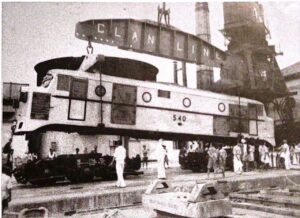
An M1 category train engine being unloaded at the Colombo Port.
The Arrival of the M1 Class Locomotives
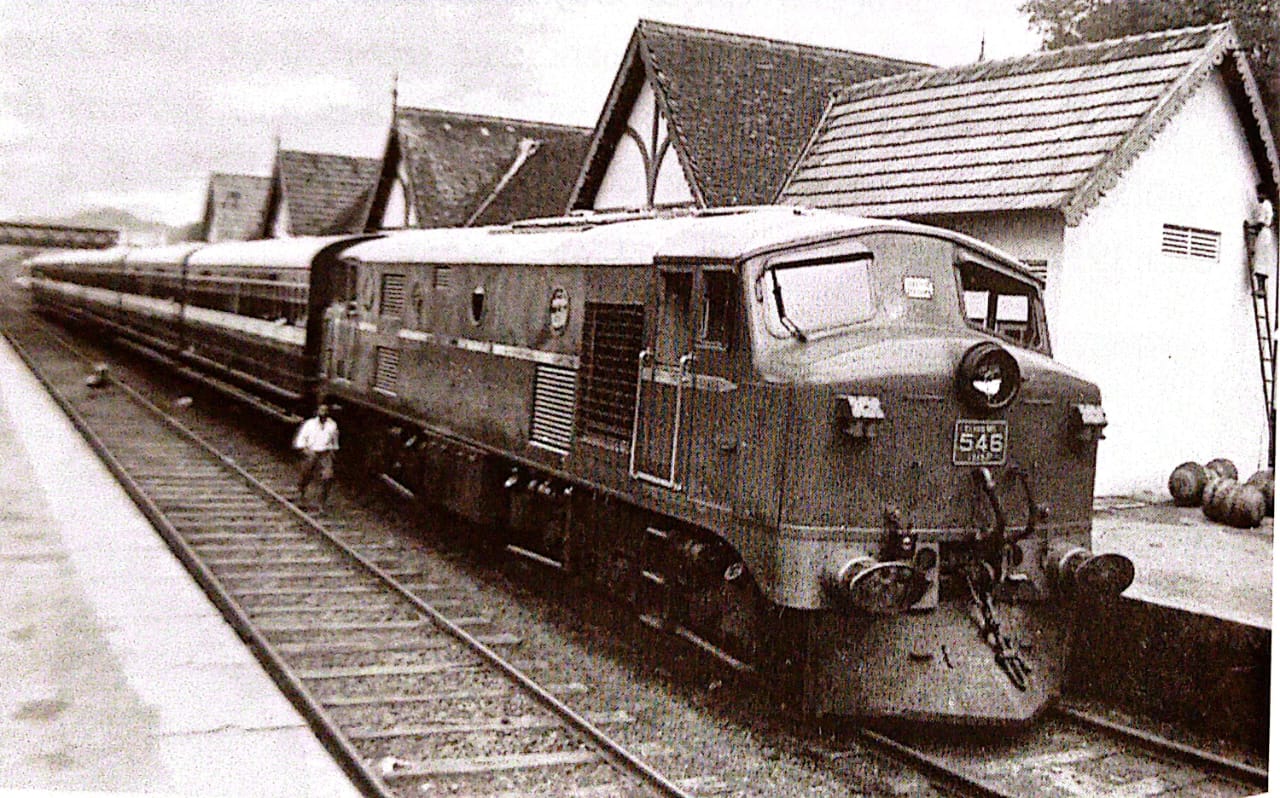
To modernize the fleet, 25 diesel-electric locomotives were ordered from the Brush Bagnall company in Great Britain and delivered in 1953. These were designated as M1 Class engines.
Power and Speed: These locomotives boasted 1,000 horsepower and could reach top speeds of 65 miles per hour.
Distinctive Design: To make them stand out, they were painted in a vibrant color scheme of blue, green, and cream.
Historical Moment: Photo 1-1 in the archives shows M1 engine No. 540 being unloaded at the Colombo Port, a symbol of the country’s moving toward a faster future.
The Birth of “Brand Name” Trains
On August 30, 1954, the Sri Lankan railway underwent a “branding” revolution. For the first time, express services were given unique names to make them more attractive to the public. The inauguration ceremony was held at Colombo Fort, led by the Minister of Transport and Works, Montague Jayawickrama.
The three original “Sister” express services were:
Mahanuwara Express: Connecting Colombo to Kandy. On its first trip, it famously reached Kandy 10 minutes ahead of schedule.
Ruhunu Express: Serving the coastal belt from Colombo to Matara.
Yalpanam Express: The vital link between Colombo and Jaffna.
Note on the Ruhunu Kumari: The text clarifies a common historical misconception: the Ruhunu Express launched in 1954 is not the same as the Ruhunu Kumari. The Ruhunu Kumari was launched later, on October 24, 1955, under the visionary leadership of General Manager B.D. Rampala.
The arrival of the first express train at Maradana on August 3, 1954, hauled by an M1 locomotive.
Why Name a Train?
Before this period, trains were mostly identified by their numbers or destinations. The introduction of names like “Express” added a sense of prestige and reliability. The Yalpanam Express, for instance, was specifically designed as a night mail service to meet the high demand for comfortable overnight travel to the North, complete with sleeping berths.
This modernization period, driven by the M1 locomotives and the introduction of named services, laid the foundation for the vibrant railway culture Sri Lanka enjoys today.