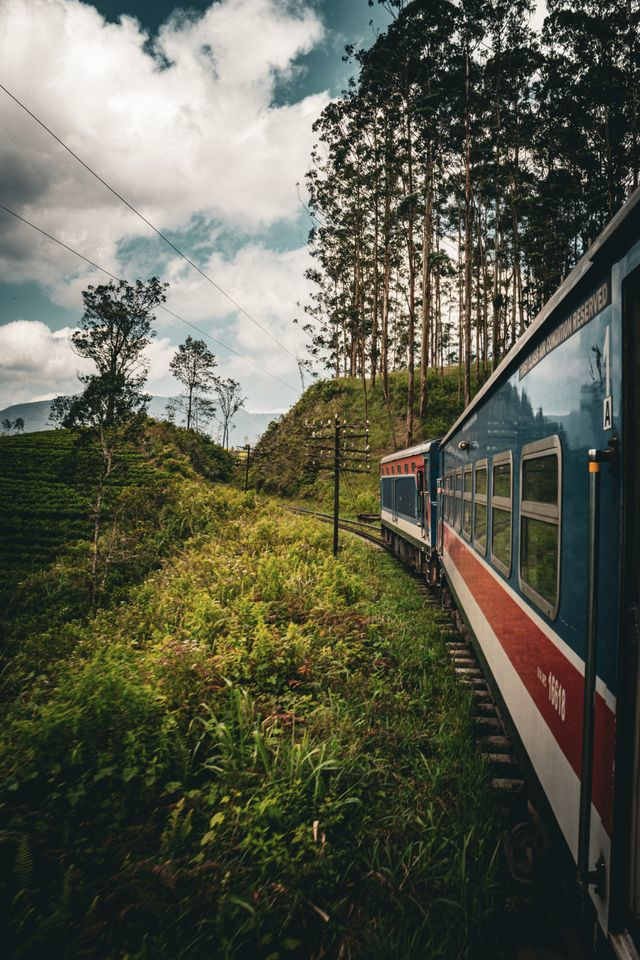
Rail was introduced in Sri Lanka in 1864 primarily to transport coffee from the hill country plantations of Kandy to the port of Colombo for export, according to Sri Lanka Railways’ historical records. The first segment of the Main Line, extending 54 kilometers from Colombo to Ambepussa, became operational on October 2, 1865. This initial railway construction, driven by the need to efficiently move coffee to European markets, was a response to the slow and inefficient bullock cart transport that previously took nearly 12 days to cover the 115 kilometers between Colombo and Kandy.
The coffee industry faced collapse after 1871 due to an outbreak of coffee rust disease, Hemileia vastatrix, which devastated plantations across the island. This catastrophic event compelled planters to pivot to tea cultivation, a more resilient crop. The shift marked a profound transformation of Sri Lanka’s agricultural landscape and economy.
Railways became essential for the burgeoning tea industry, facilitating the transport of tea to Colombo and moving labor, machinery, fertilizer, and food supplies to the expanding plantation areas. The Main Line, originally intended to connect Colombo with Kandy, was systematically extended deeper into the central highlands to serve these new tea estates. Service reached Kandy in 1867, Nawalapitiya in 1874, Nanu Oya in 1885, Bandarawela in 1894, and finally Badulla in 1924. This extensive railway network opened access to previously isolated regions, supporting not only tea but also coconut and rubber plantations.
Engineers overcame challenging mountainous terrain, constructing numerous bridges, tunnels, and viaducts that remain architectural achievements. Notable engineering feats include the Demodara Loop, where the track spirals over itself to gain elevation, and the iconic Nine Arch Bridge near Ella. These routes were designed for efficiency but also offer passengers breathtaking views of tea gardens, mountains, valleys, and waterfalls.
Today, the historic railway lines, particularly the Main Line through the hill country, are celebrated for their scenic beauty and cultural significance, drawing international travelers and local rail enthusiasts alike. Journeys such as the Kandy to Ella route are particularly renowned, winding through lush tea plantations, mist-covered valleys, and dense forests. Passengers can observe the landscape at a leisurely pace, with trains traveling at speeds of 25–40 km/h in the hill country.
For current travel, reserved seats on popular routes like Kandy–Ella or Nanu Oya–Ella often sell out quickly. Travelers can book reserved tickets on the official Sri Lanka Railways website, reserverail.lk, exactly 30 days before their desired travel date. If reserved seats are unavailable, unreserved 2nd or 3rd class tickets can be purchased at the station on the day of travel. As of December 23, 2025, Sri Lanka Railways has restored train operations on the Upcountry Railway Line between Badulla and Ambewela, and the South Coast Network is operating normally.
